

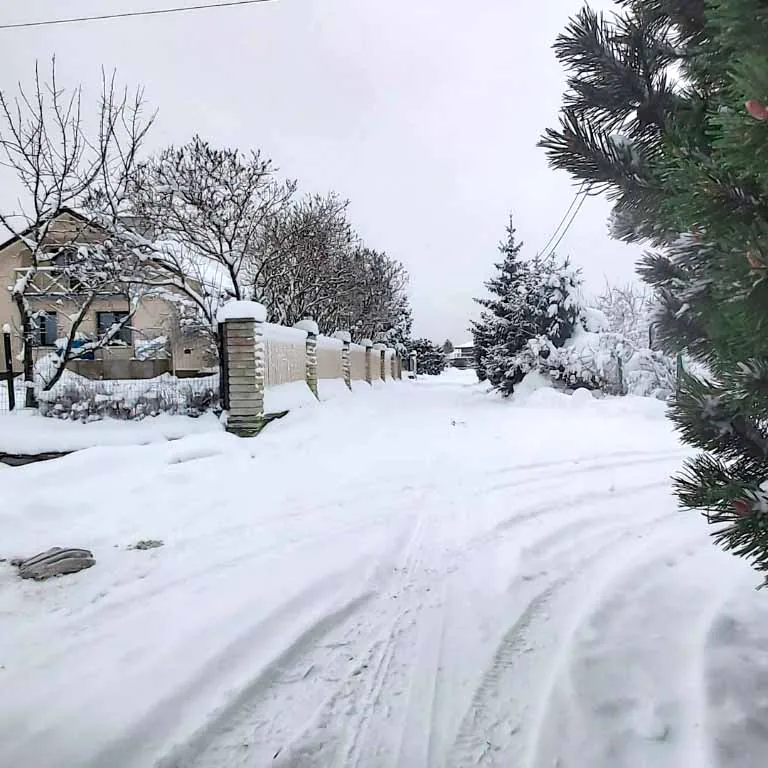
In Middle Tennessee, winter temperatures often swing above and below freezing within a few days. One day might bring a hard freeze, then it warms up before getting cold again. For homes with vented crawl spaces, these changes can cause ongoing moisture problems under the house.
Winter crawl space condensation in Middle Tennessee develops when vents let in outside air that is warmer and more humid than the crawl space. That air moves across cold framing, ducts, and other surfaces. When that humid air settles against cold joists, ductwork, and subfloor, it condenses. Then the weather turns, and it starts over.
That repetition is what sets freeze-thaw crawl space moisture apart from a one-time wet spell. The same framing and insulation get re-wetted several times a winter, with little chance to dry out in between.
More ventilation won’t break that cycle because the outside air is the source of the moisture. What does break it is sealing the vents, air sealing the gaps, and insulating the perimeter walls. That’s the idea behind crawl space encapsulation, which we’ll cover later in this post. First, let’s see why code-minimum vents work against your home once winter arrives.
How Middle Tennessee’s Freeze-Thaw Cycle Triggers Crawl Space Condensation
Why Vented Crawl Spaces Breathe Outside Air
A vented crawl space is built to trade air with the outdoors. Openings in the foundation walls let air move in and out, so whatever the weather is doing, the space under the house feels it.
The catch is timing. Outdoor air reacts to weather changes faster than the crawl space does. The ground warms up or cools down more slowly. As a result, the joists and ducts under your floor can stay cold even after it warms up outside.
Warmer, moister air flows in through the vents and lands in a space still holding on to the previous cold. That mismatch is a big reason vented crawl space moisture in Nashville can show up during winter, not just during muggy summers.
Climate plays a part, too. Davidson County is in IECC Climate Zone 4A, a mixed-humid climate. The same building-envelope principles that apply to attic insulation also apply below the house, where temperature and moisture work against each other.
Warm, Humid Air Meets Cold Framing
Condensation happens when warm, humid air touches a cold surface. In a crawl space, this could be a floor joist, duct, or subfloor. In humid areas, outside air entering through foundation vents can cause moisture to form on cooler floor joists.
A single freeze-thaw event isn’t the real problem; the repetition is. Middle Tennessee can go through dozens of these swings over a winter, wetting the same joists and insulation repeatedly. Waiting for a long cold stretch doesn’t solve it either. As long as the vents tie the crawl space to the outdoors, the moisture keeps coming back.
Why ‘Venting It Harder’ Doesn’t Solve Winter Crawl Space Moisture
Vents Let In the Same Air Causing the Problem
Foundation vents were originally meant to let moisture escape. In a humid climate, they can also bring in more moisture. Opening more vents usually won’t fix a damp crawl space in winter because that sends more humid air across cold surfaces, where condensation can form.
It helps to think of humid air cold surface condensation as a supply problem. Much of that moisture comes from air entering through the vents. It’s important to design crawl spaces to avoid moisture problems from the start, so controlling how outside air enters is the better approach.
Code Minimums Are a Floor, Not a Fix
A vented crawl space can meet code and still get damp during a Tennessee winter. Warm spells bring in humid air, then the next freeze cools the framing again. Code minimums don’t change that cycle.
To convert a vented crawl space, seal the exterior vents and insulate the crawl space walls. A vapor barrier also covers the ground. Together, these steps help limit humid outdoor air coming into the space.
High humidity can also create conditions that favor crawl space mold in winter in Tennessee. Keeping indoor relative humidity below 60%, and ideally between 30% and 50%, helps control the conditions that favor mold growth.
If your home has already been through a few winters with a vented crawl space, it’s worth checking what they left behind. Our spring crawl space inspection post covers what to look for.
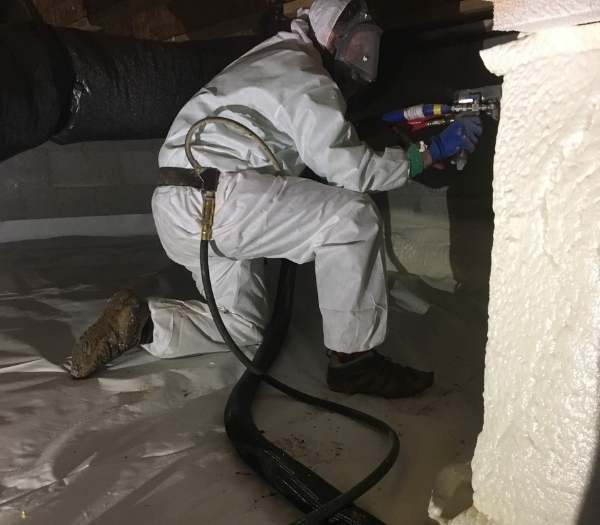
Closing crawl space vents in winter by itself is only a temporary patch. Air leaks, uninsulated walls, and ground moisture still need to be addressed as part of a crawl space conversion.
Sealing and Insulating: The Long-Term Fix for Vented Crawl Spaces
Air Sealing Cuts Off the Humid Air Supply
The real difference in a sealed crawl space vs vented design comes down to one question: where does the house end and the outdoors begin?
In a traditional vented crawl space, insulation sits beneath the floor while the crawl space remains open to outside air. When you seal and condition the space, the air-sealing and insulation boundary moves down to the foundation walls, following the conversion guidance.
The crawl space becomes part of the home’s conditioned space. With the vents sealed and the walls insulated, temperature and humidity can stay more stable through changing outdoor conditions.
Sealing the vents only gets you part of the way there. Air can still slip in through other gaps and openings. Thorough air sealing closes those areas too, which is why crawl space air sealing in winter helps control moisture under the house.
Insulated Perimeter Walls Keep Framing Above Dew Point
Once you control humid air, insulation helps with the other half of the problem: surface temperature. Condensation forms when a surface is colder than the surrounding air’s dew point. Keeping these surfaces warmer reduces the chance of moisture collecting.
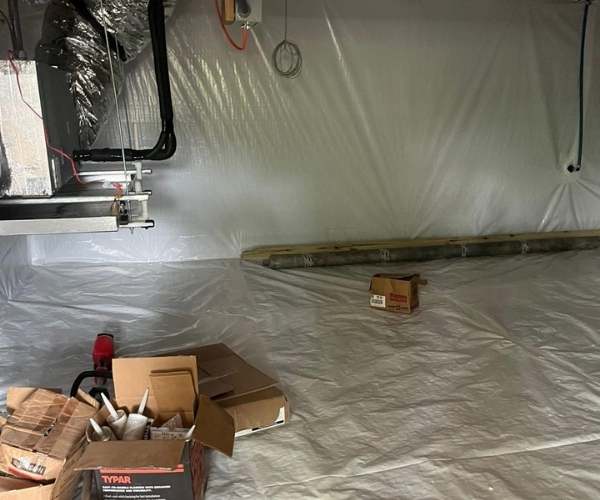
Encapsulation uses a vapor barrier over the ground and insulation along the crawl space walls. The goal is to control ground moisture and help keep the space and framing warmer. Depending on the assembly, you may use spray foam insulation along the perimeter walls.
That’s the idea behind crawl space encapsulation in Nashville. Crawl space encapsulation replaces the open, vented setup with a sealed and insulated one, reducing the conditions that allow the humid-air-meets-cold-surface cycle to continue.
It also improves efficiency. Homeowners can save an average of about 15% on heating and cooling costs by air sealing and adding insulation in attics and floors over crawl spaces.
FAQ
Address Crawl Space Moisture Before the Next Freeze-Thaw Cycle
When humid air comes in through the vents and the crawl space is still cold from a recent freeze, moisture can collect on the framing and other surfaces. This issue can come back when the weather shifts again. Sealing and insulating the crawl space can help control these conditions.
A crawl space evaluation before the next freeze-thaw stretch can catch moisture issues before another winter cycle adds to them. If you’ve noticed damp framing or condensation on your ductwork, contact Hayes Insulation to schedule an evaluation.
References
United States Department of Energy. “Building America Climate-Specific Guidance.” Energy.gov, U.S. Department of Energy, www.energy.gov/cmei/buildings/building-america-climate-specific-guidance.
United States Department of Energy, Building America Solution Center. “Insulating Crawl Space Floors in Existing Homes.” Pacific Northwest National Laboratory, basc.pnnl.gov/resource-guides/insulating-crawl-space-floors-existing-homes.
United States Department of Energy, Building America Solution Center. “Vented to Unvented Crawl Space.” Pacific Northwest National Laboratory, basc.pnnl.gov/home-improvement-expert/checklists/vented-unvented-crawl-space.
United States Environmental Protection Agency. “Mold Course Chapter 2: Why and Where Mold Grows.” EPA, www.epa.gov/mold/mold-course-chapter-2.
United States Environmental Protection Agency. “Why Seal and Insulate?” ENERGY STAR, www.energystar.gov/saveathome/seal_insulate/why-seal-and-insulate.