
For many Nashville homeowners, spring cleanup means clearing gutters, opening windows, and freshening up the yard. But one important part of the home often gets skipped: the crawl space.
After winter freeze-thaw cycles and early spring rain, your crawl space can reveal problems that stayed hidden during colder months. Standing water, torn vapor barriers, pest activity, sagging insulation, and musty odors can all affect comfort, indoor air quality, and energy bills.
That matters even more in Davidson County, which sits in IECC Climate Zone 4A, a mixed-humid climate zone. As spring humidity rises and soil moisture increases, the potential for moisture problems exists anywhere building components are below grade. In middle Tennessee’s humid climate, vented crawl spaces are especially vulnerable to mold, wood rot, pests, and insulation failure. Code-minimum insulation may meet the basic requirement, but it does not always solve moisture problems.
Spring is the right time to inspect your crawl space because it gives you a chance to catch issues before summer humidity makes them worse. This guide covers what to look for, what Nashville’s current crawl space insulation requirements mean, and which upgrades can help protect your home long term.
If you haven’t looked at your crawl space since last spring, a professional inspection can tell you if it’s performing the way your home needs it to.
What to Inspect This Spring (Before Humidity Takes Over)
During an inspection, make it a priority to check these four things in your crawl space:
Water and drainage
Look for standing water, stains on the foundation walls, mineral deposits, and low areas. Exterior grading should move water away from the foundation.
Crawl space vapor barrier
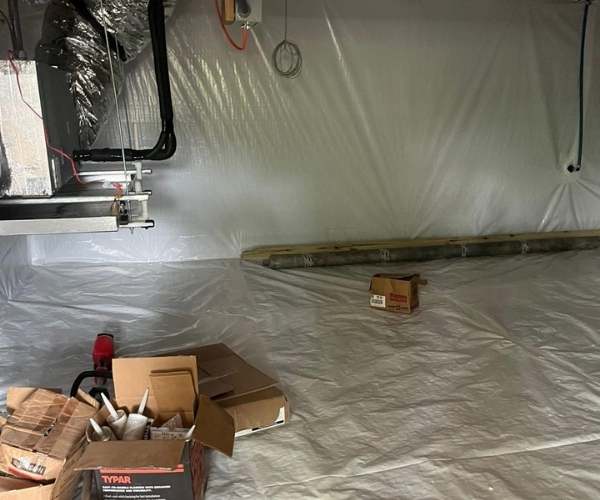
Ensure that plastic sheeting is intact, overlapped at the seams, and extended up the foundation walls when possible. NC State Extension recommends checking crawl spaces for leaks and covering soil with at least 6-8 mil plastic.
Insulation integrity
Sagging, wet, compressed, discolored, or rodent-damaged insulation does not perform as it should. Fiberglass batts between floor joists are especially vulnerable in humid crawl spaces. If your home is older, these may be signs your crawl space insulation needs replacement.
Pest activity and wood condition
Warning signs that a professional evaluation is needed include rodent droppings, termite mud tubes, soft joists, musty odors, or dark staining. Crawl space pests and mold often show up where moisture, gaps, and damaged insulation already exist.
What Nashville’s Code Requires (and Why It’s the Floor, Not the Ceiling)
Davidson County lies in IECC Climate Zone 4A, a mixed-humid climate. Under Tennessee’s 2018 International Energy Conservation Code (IECC) baseline, crawl space walls in Zone 4 require R-13 cavity insulation or R-10 continuous insulation. Floors over unconditioned crawl spaces require R-19 insulation, while ceilings/attics require R-38 insulation. Nashville and Davidson County have also adopted the 2024 IECC Energy Code locally, which further refines these requirements.
These amounts are crawl space code minimums Tennessee builders must meet to pass building inspection, but they should be viewed as the floor, not the ceiling. State codes often require vents to remove moisture from the crawl space. A code-minimum vented crawl space may pass inspection, but still struggle in our mixed-humid climate because of the moisture it draws in with outdoor air.
The Department of Energy (DOE) has found that sealed, unvented crawl spaces with insulated perimeter walls and a ground vapor barrier often perform better in humid climates like Nashville’s. The DOE’s Building America research shows sealed and insulated crawl spaces can reduce heating and cooling energy use by 15% to 18%.
Code keeps a home legal. Smart moisture control, insulation, and crawl space air sealing help keep it dry, comfortable, and efficient.
When to Upgrade – What Works in Nashville
To ensure you have the most efficient and protected crawl space for the Nashville area, prioritize these steps:
Priority 1: Address moisture before anything else.
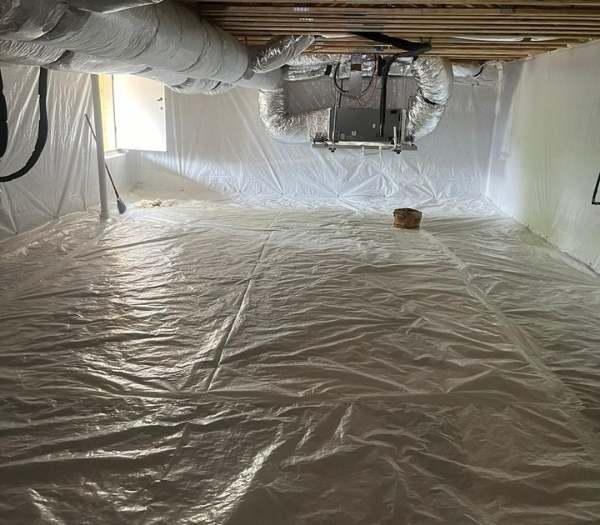
Before adding insulation, the crawl space needs a strong ground barrier and a drainage plan. A vapor barrier helps stop soil moisture from moving into the air under your home. The DOE recommends installing a 6-mil polyethylene vapor diffusion barrier across the crawl space floor.
Priority 2: Air seal the rim joists and foundation walls.
Next, seal air leaks at the rim joists, sill plates, plumbing penetrations, and foundation gaps. Professional air sealing helps turn the crawl space into a controlled part of the home.
Priority 3: Insulate the crawl space walls, not the floor.
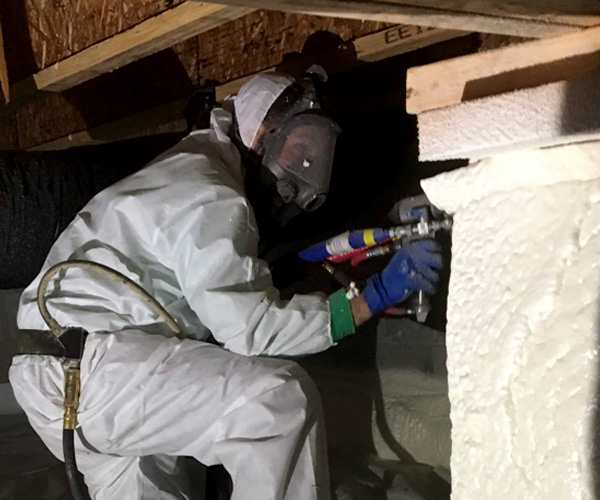
In a sealed, conditioned crawl space, insulation moves from between the floor joists to the perimeter foundation walls. For many Nashville homes, closed-cell spray foam insulation is a strong fit because it can insulate, seal air leaks, and resist moisture in one application. A spray foamed crawl space can also help improve home energy efficiency Nashville homeowners notice through steadier comfort.
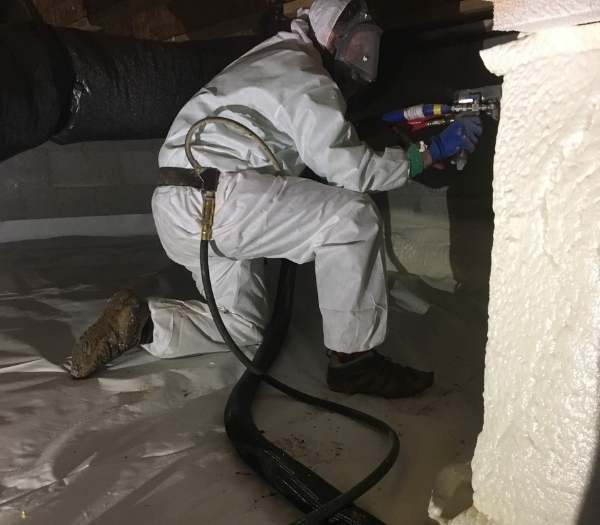
Priority 4: Consider full encapsulation for older homes.
Crawl space encapsulation combines a continuous ground and wall vapor barrier with spray foam wall insulation and air sealing. Older homes may benefit the most from full Nashville crawl space encapsulation, especially local pre-1990’s homes that often have no crawl space insulation at all or only deteriorated fiberglass.
Frequently Asked Questions
A Drier, More Efficient Home Starts Below the Floor
Spring is the best time to catch crawl space problems while they are still manageable. In Nashville’s mixed-humid climate, moisture control should come first, followed by air sealing and wall insulation. Code minimums matter, but they are only the starting point.
For a crawl space that is dry, sealed, insulated, and built for middle Tennessee conditions, homeowners can count on Hayes Insulation. Our team has the local experience needed to provide practical home energy efficiency recommendations, and quality work that supports comfort from the ground up. Contact us today to schedule a crawl space evaluation for your Nashville home before summer humidity takes over.
References:
Nashville and Davidson County. “Chapter 3 [RE] General Requirements: Nashville and Davidson County Energy Code 2024.” UpCodes Viewer, https://up.codes/viewer/nashville/iecc-2024/chapter/RE_3/re-general-requirements.
NC State Extension. “Mold and Moisture Checklist.” North Carolina State University Cooperative Extension, https://content.ces.ncsu.edu/mold-and-moisture-checklist.
Tennessee. “Tennessee Residential Energy Code 2018 based on the International Energy Conservation Code 2018 (IECC 2018).” UpCodes Viewer, https://up.codes/viewer/tennessee/iecc-2018.
U.S. Department of Energy. “Building America Climate-Specific Guidance,” https://www.energy.gov/cmei/buildings/building-america-climate-specific-guidance.
National Renewable Energy Laboratory. (2015, September). Building America case study: Sealed crawl spaces with integrated whole-house ventilation in a cold climate, Ithaca, New York (NREL/FS-5500-64459; DOE/GO-102015-4700). U.S. Department of Energy, Office of Energy Efficiency and Renewable Energy. https://www.osti.gov/biblio/1226487
U.S. Department of Energy. “Insulation.” Energy Saver, www.energy.gov/energysaver/insulation.
U.S. Department of Energy. “Insulate Conditioned Crawl Space Wall.” Weatherization Assistance Program Job Aid 12-4, www.energy.gov/sites/default/files/2024-07/12-4_insulate-conditioned-crawl-space-wall.pdf.
U.S. Department of Energy. “Moisture Control.” Energy Saver, www.energy.gov/energysaver/moisture-control.
U.S. Department of Energy. “Where to Insulate in a Home.” Energy Saver, www.energy.gov/energysaver/where-insulate-home.
U.S. Environmental Protection Agency. “Recommended Home Insulation R-Values.” ENERGY STAR, www.energystar.gov/saveathome/seal_insulate/identify-problems-you-want-fix/diy-checks-inspections/insulation-r-values.
University of Georgia Cooperative Extension. “Mold and Moisture Home Inspection Checklist.” UGA Extension Circular 1083, https://extension.uga.edu/publications/detail.html?number=C1083&title=mold-and-moisture-home-inspection-checklist.