

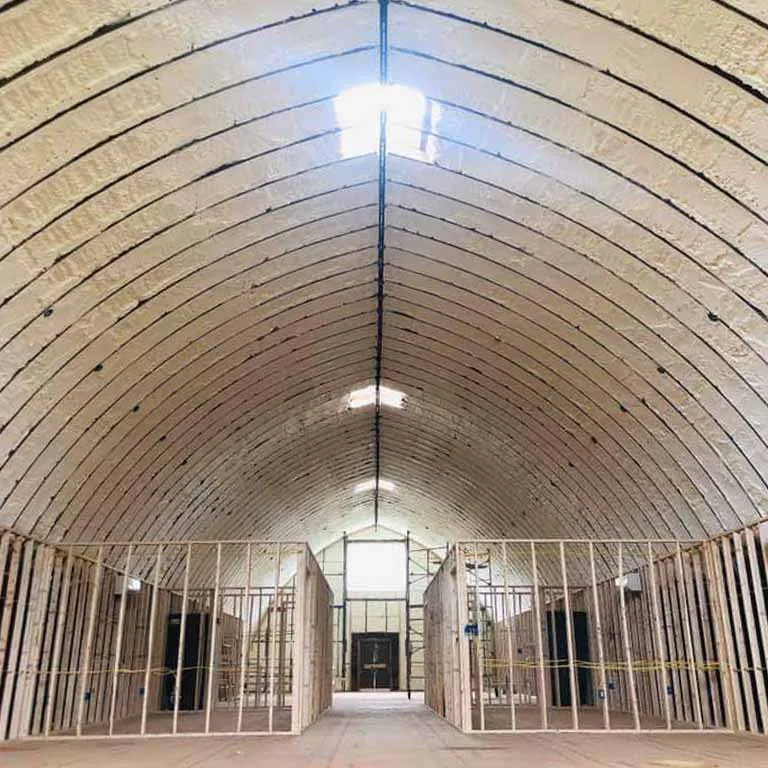
Barndominiums and metal buildings are going up across Middle Tennessee faster than ever. But many homeowners don’t realize that a bare steel shell does not behave like a wood-framed house. Uninsulated and poorly insulated metal structures swing hot in summer and cold in winter. They can also sweat with condensation that can damage their framing and finishes over time.
The right insulation system, matched to Middle Tennessee’s climate, controls those swings and keeps condensation in check before it turns into a bigger repair down the road. Homes and businesses in Davidson County and the surrounding area fall in one of two climate zones, IECC climate zone 3A or 4A. These zones are both marked by heat and humidity that shape the insulation approach from day one.
This guide covers three main insulation approaches for insulating a metal building or barndominium: faced fiberglass batt, spray foam, and mineral wool. The biggest difference between insulating a metal structure and insulating a standard house is condensation control. Yet it can often be overlooked by homeowners until a problem shows up.
Keep reading to learn more about these different insulation materials and how they compare. Consider consulting with a professional to ensure you choose the best system for your structure.
Why Metal Buildings and Barndominiums Need a Different Insulation Approach
The popularity of barndominiums has brought many homeowners face to face with steel’s quirks for the first time. They are more familiar with traditional wood construction, so the differences in how the building envelope performs can easily catch them off guard midway through a project. Anyone insulating a metal building for the first time should expect a different set of decisions than a traditional home renovation, from material selection down to how the vapor retarder is installed.
The Climate Factor
Tennessee is split between two climate zones. Based on their newly adopted energy code, the city of Nashville and Davidson County fall under IECC climate zone 3A. This is considered a warm-humid zone with hot, humid summers and mild winters. Most other Middle Tennessee counties such as Franklin, Rutherford, and Johnson follow energy standards that place them in IECC climate zone 4A. Tennessee counties in this climate zone are classified as mixed-humid, with warm, humid summers and cold winters. These classifications shape the building code requirements a contractor must follow.
Steel-framed buildings do not use the same simplified table as a standard wood-framed home. These projects are instead governed by a separate IECC section. Because of that, there is no single R-value metal building Tennessee number that applies to every project. Requirements shift based on how the space is used and how it is framed. The local building department can confirm the exact requirement for your build. That will ensure you install the right amount of metal building insulation for your project.
Why Steel Behaves Differently
Metal is highly conductive. An uninsulated building heats up and cools down fast and can develop interior condensation the moment warm indoor air meets a cool metal surface. Wood framing does not transfer heat nearly as quickly, so a barndominium shell needs a different insulation strategy from the start.
Insulation Options for Metal Buildings and Barndominiums
Faced Fiberglass Batt (Metal Building Standard)
Faced fiberglass metal building insulation is the industry standard for pre-engineered structures. It is a distinct product from residential batts and is built to survive the lamination process and hold its R-value over time. Manufacturer guidance for metal building insulation systems covers flexible fiberglass insulation designed to be laminated with facings for the walls and roofs of pre-engineered metal buildings.
Standard residential fiberglass insulation is not built for this job. It lacks the strength to survive lamination while still delivering its labeled R-value. Plus, it is not manufactured in the sizes metal buildings require.
Spray Foam for Barndominium Living Spaces
A spray foam metal building application works well for finished barndominium interiors because it insulates and air seals in a single step. This matters most in rooms where comfort and energy bills are the priority. Spray foam insulation expands to fill gaps that batt insulation cannot reach, so it holds up well against Middle Tennessee’s humidity swings. It also adapts well to the odd angles and tight corners common in barndominium interiors. Closed-cell spray foam also provides an effective vapor barrier.
Mineral Wool as an Alternative
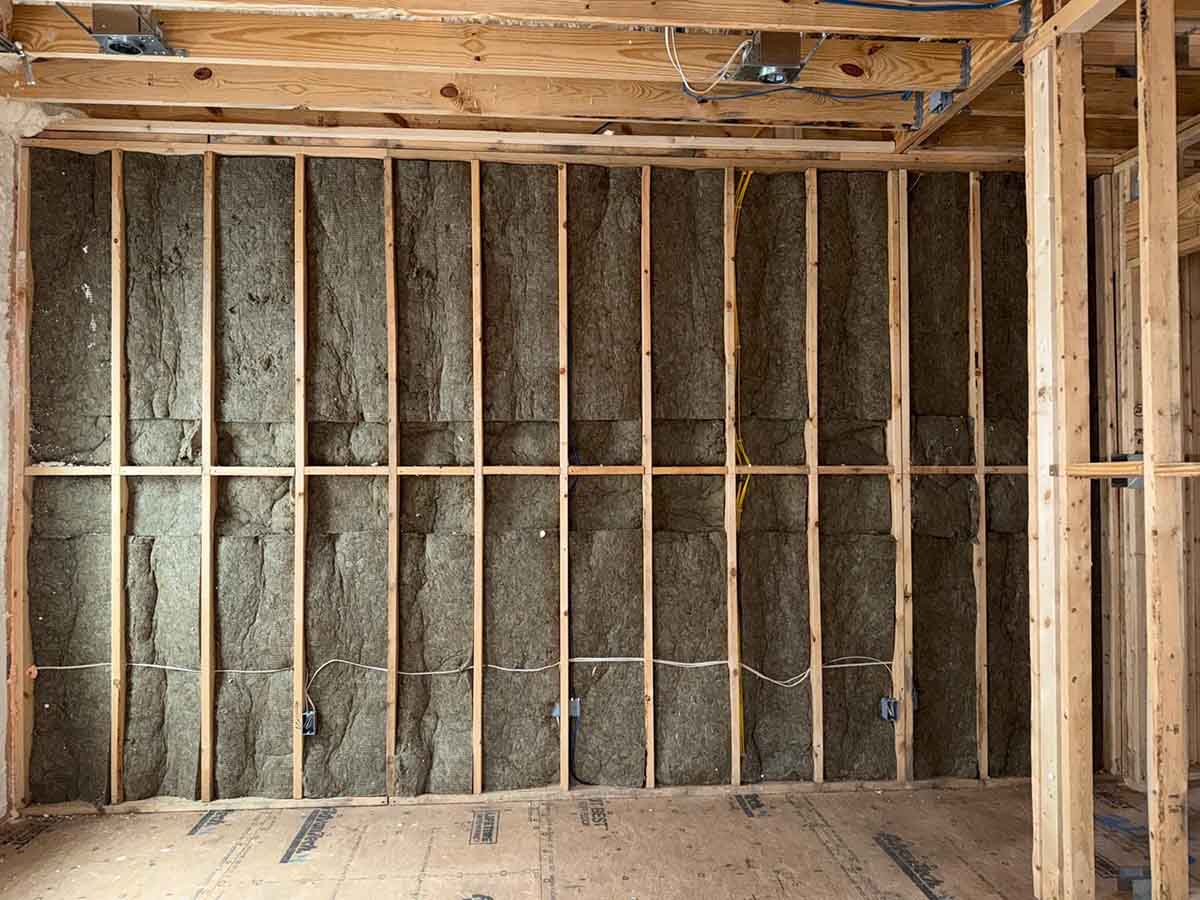
Mineral wool is another option worth considering, especially where density and fire resistance matter. It works as a solid sound-dampening material and provides strong fire protection. Although it has natural water-repellent properties, it still requires a proper vapor barrier.
Matching Material to Use Case
The right system often depends on how the space is used. A barndominium shell frequently needs more than one approach:
- An unconditioned shop or storage space can often get by with a lighter system.
- Conditioned living quarters usually call for a full insulation and air sealing plan.
Working through the barndominium insulation types available before construction starts saves time and rework later.
Controlling Condensation and Moisture in Metal Structures
Why Condensation Happens
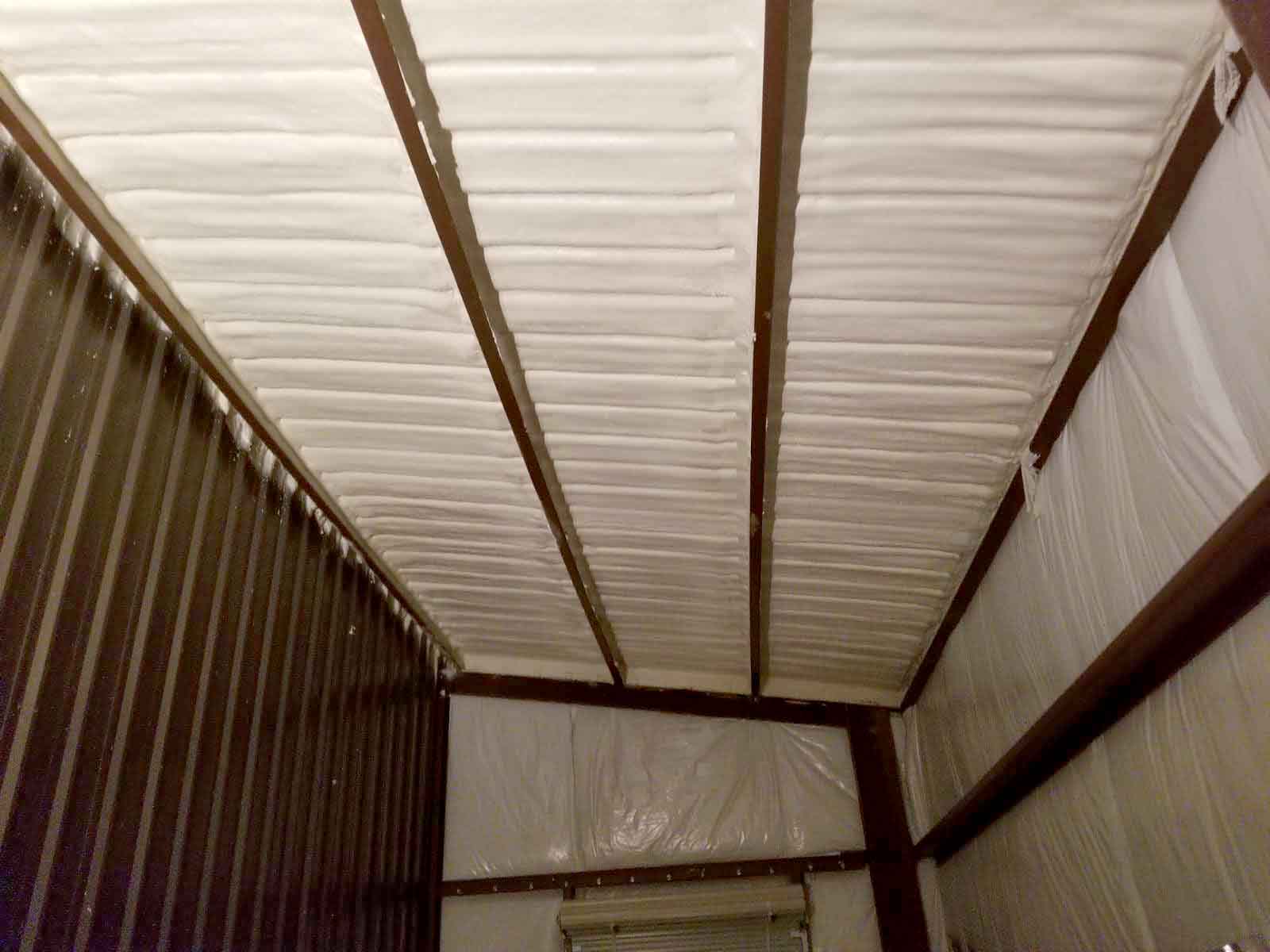
Condensation forms when warm, moist indoor air meets a cold metal surface. Even unconditioned metal buildings can benefit from at least a basic condensation-control layer. Where energy codes do not require the building envelope to be insulated, it is still recommended to have at least one layer of condensation blanket installed in the roof. This helps prevent a serious condensation problem and dripping inside the building.
Unmanaged moisture in any structure can lead to mold growth. The key to controlling mold is moisture control. If mold does show up, clean it promptly and fix the water problem behind it. Drying the area within 24 to 48 hours keeps a small issue from becoming a bigger one.
Vapor Retarder Placement
When installing faced fiberglass insulation, it is important that the facing material provides the right water vapor permeance for the climate and application. Its appearance and durability should also be appropriate for use in the roofs and walls of metal buildings. Proper installation of the vapor retarder will help keep moisture from getting trapped inside a wall or roof assembly.
Air Sealing Ties In
Insulation alone is not an air barrier. Air sealing works alongside insulation to control both temperature and moisture. It closes the gaps that let humid air reach the cold metal surfaces inside the building. For more on how this works in a home setting, see “Why You Should Air Seal Your Nashville Home (and How Spray Foam Helps).”
Frequently Asked Questions
Building a Metal Structure That Performs
Metal buildings and barndominiums need a climate-matched, condensation-aware insulation plan rather than a standard residential approach. The right material varies by project and the use of the space. Faced fiberglass insulation fits most structural applications. Spray foam suits finished living space and mineral wool comes into play where fire resistance matters most. Getting this decision right up front can save homeowners from costly rework once the walls and ceilings are already closed in.
A free on-site assessment is the easiest way to find out which system fits your build before you commit to one. Our expert insulation team at Hayes Insulation works with you to create a customized insulation solution for your metal building project. Contact us today to schedule a consultation for your metal building or barndominium insulation project. We provide a plan built for Middle Tennessee’s climate from the start.
References
National Fenestration Rating Council. “IECC Compliance Guide for Homes in Tennessee: 2018 International Energy Conservation Code.” Efficient Windows, https://efficientwindows.org/wp-content/uploads/codes2018/Tennessee2018.pdf.
National Insulation Association. “FAQs.” NIA, https://insulation.org/about-insulation/metalbuildinginsulation/faqs/.
North American Insulation Manufacturers Association. “IECC Compliance Guide for Homes in Tennessee: 2009 International Energy Conservation Code.” Insulation Institute, https://insulationinstitute.org/wp-content/uploads/2015/12/TN-2009.pdf.
United States Environmental Protection Agency. “A Brief Guide to Mold, Moisture and Your Home.” EPA, www.epa.gov/mold/brief-guide-mold-moisture-and-your-home.
United States Environmental Protection Agency. “Why Seal and Insulate?” ENERGY STAR, www.energystar.gov/saveathome/seal_insulate/why-seal-and-insulate.
UpCodes. “Nashville and Davidson County Residential Code 2024.” https://up.codes/viewer/nashville/irc-2024/chapter/11/re-energy-efficiency#N1101.