
If you’ve added insulation but still feel drafts, face high energy bills, or can’t get your home comfortable, you’re not alone. Many Nashville homeowners assume that more insulation fixes everything. But there’s often a bigger culprit at work.
The real problem is air leakage throughout your home, allowing uncontrolled air movement through the cracks and gaps in your building envelope. ENERGY STAR air sealing research shows air leakage accounts for 25 to 40% of the energy used for heating and cooling in a typical home. That’s a significant chunk of your utility bill escaping through places you can’t see.
Nashville sits in IECC Climate Zone 4A, a mixed-humid area. This means your home faces both extremes of hot, sticky summers and cold winters. Both seasons create pressure differences that drive air through every gap they can find. Air sealing closes those gaps so your insulation can do its job.
This guide explains what air sealing is and why it pays off in Nashville’s climate. It also explores where the worst leaks hide and how to pair air sealing with insulation for the biggest impact.
Wondering if your home is leaking energy? An insulation evaluation can pinpoint the exact spots costing you comfort and money each month.
How Air Leakage Drains Energy from Nashville Homes
The U.S. Department of Energy notes that air leaks not only drive up energy costs but also “can contribute to moisture problems that affect occupants’ health and the structure’s durability.”
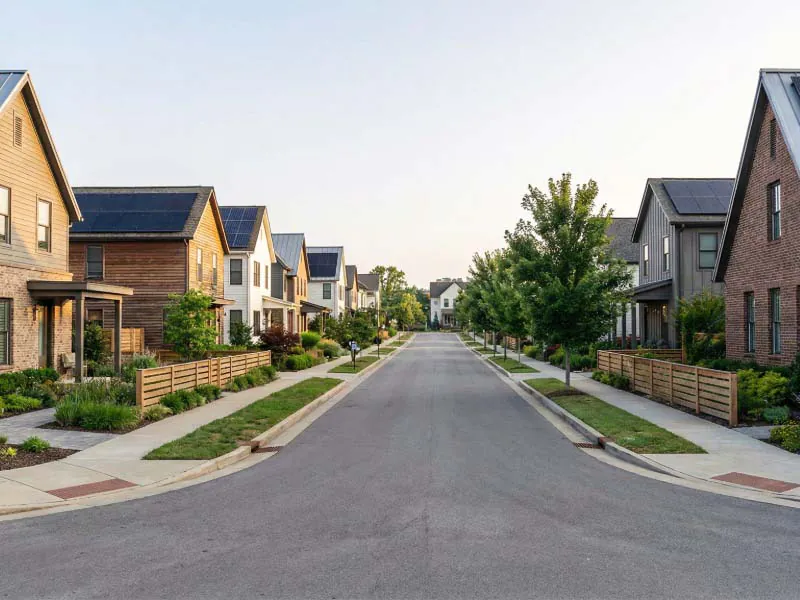
In summer, hot, humid outdoor air infiltrates through leaks, forcing your AC to repeatedly cool and dehumidify the same air. In winter, stack effect in your home takes over, where warm air rises and escapes through attic penetrations while cold air is pulled in at the lower levels. The result is cold floors, a drafty house Tennessee homeowners know all too well, and heating cycles that seem to run nonstop.
Davidson County insulation challenges are year-round thanks to our mixed-humid climate in zone 4A. Air sealing pays off in every season, not just one, making it a smart choice for your Nashville home.
What Air Sealing Actually Does (and Where Leaks Hide)
Air sealing is the process of identifying and closing the small gaps and cracks in your home’s exterior shell. Adding caulk and weatherstripping are the two simplest air sealing techniques. Caulk is used for stationary cracks like window frames and weatherstripping for moving parts like doors. They both often pay for themselves in under a year. Larger gaps around plumbing chases and attic penetrations typically require spray foam or fire-rated caulk to get the job done.
Here’s where the biggest leaks hide in most Nashville-area homes:
Attic floor
The top plates of interior walls, recessed light cans, the attic hatch perimeter, and plumbing or electrical penetrations.
Rim joists
Where the first floor framing meets the foundation. This is one of the highest-impact areas in homes with crawl spaces or basements.
Windows and exterior doors
Worn weatherstripping, gaps between framing and rough openings, and gaps under thresholds.
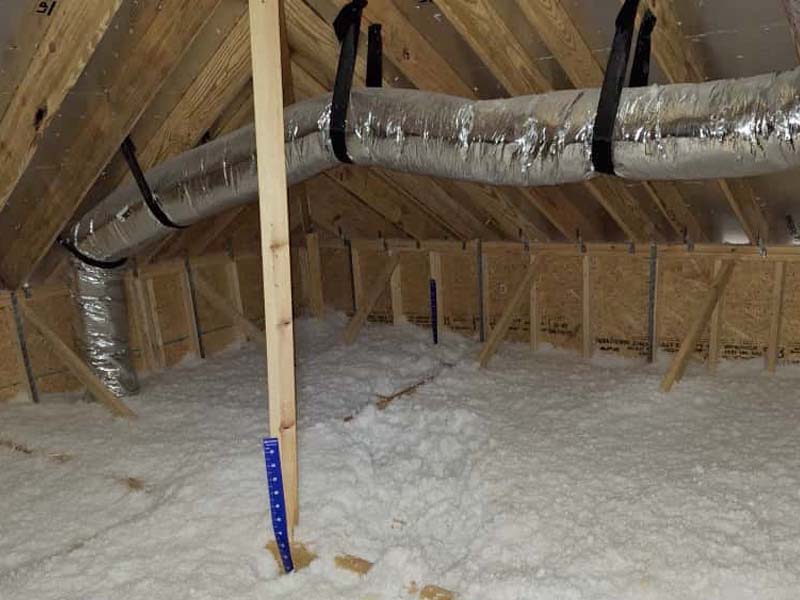
Ductwork in unconditioned space
Leaky supply and return runs in attics and crawl spaces.
Fireplace chimneys, dryer vents, kitchen and bath exhaust penetrations
Professional air sealing services take stock of all these areas, including attic floor and rim joist leaks, so nothing gets missed.
Air Sealing + Insulation: Why Both Matter in Climate Zone 4A
Think of your building envelope as a system. Insulation slows the flow of conductive heat (heat moving through your walls and ceilings). Air sealing stops convective heat flow (the air carrying heat and moisture through gaps). Without both, you’re only solving half the problem.
A high-R-value insulation job without air sealing is like wearing a thick sweater full of holes on a windy day. The material is there, but the wind blows straight through.
Under Tennessee’s energy code, the 2018 IECC, climate zone 4A insulation requirements include R-13 of insulation for wood-frame walls and R-38 in ceilings for new homes. The building envelope air leakage standard is 3 ACH50 (air changes per hour at a pressure of 50 pascals), although blower-door test verification is optional under the state amendments. These are the legal minimums, not necessarily what’s needed for peak comfort and efficiency in an older Nashville home.
Current U.S. Department of Energy insulation guidelines recommend higher R-values for existing homes in climate zone 4A for more cost-effective performance, especially in the attic (R-60).
When you insulate and air seal specific areas of your home, it’s estimated that you can save an average of 15% on your heating and cooling costs. An attic insulation upgrade paired with proper attic air sealing delivers the biggest return on investment.
Comfort, Durability, and Indoor Air Quality
The benefits of air sealing go well beyond your energy bill.
A tighter envelope means fewer drafts, more even room-to-room temperatures, and an HVAC system that isn’t constantly playing catch-up. It also controls moisture migration. This is especially important in our humid summers, when excess moisture in walls and attic decking can lead to condensation, increased mold risk, and long-term structural damage.
Indoor air quality also improves. Air sealing and insulation are important weatherization measures that improve the indoor air quality of Nashville homes and can support respiratory health for people with breathing issues. Take the time to understand how air sealing affects indoor allergens for Nashville households.
One important caveat: tightening your home without addressing ventilation needs can increase indoor concentrations of combustion gases, VOCs, and moisture. A reputable contractor will evaluate your home’s ventilation before sealing, so it’s worth asking about upfront.
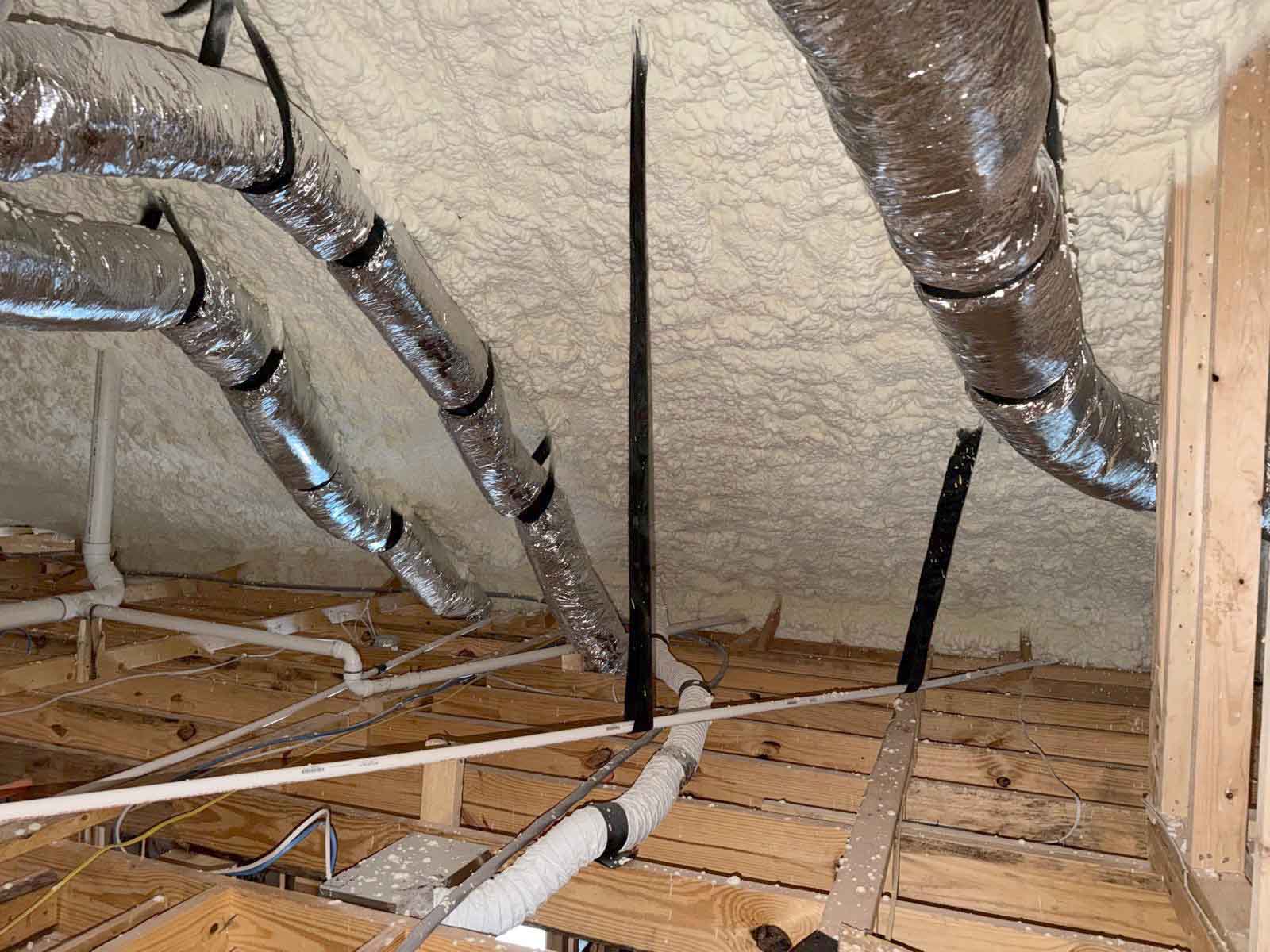
Spray foam insulation is one of the most effective materials for the job. Closed-cell spray foam insulates and air seals in a single application, making it especially useful for rim joists, cathedral ceilings, and hard-to-reach cavities where a separate air barrier isn’t practical. It also provides an effective vapor barrier. Open-cell spray foam serves a similar function in areas that are less prone to moisture.
Ready to Stop Paying for Conditioned Air That Escapes?
Insulation alone isn’t a complete answer. Your building envelope is a system, and air sealing is the first step that makes every other efficiency upgrade work better.
In Nashville’s mixed-humid climate, air sealing pays off. In summer, with less humid air infiltration and less AC runtime. In winter with less stack-effect heat loss. And year-round with steadier temperatures, healthier indoor air, and longer HVAC equipment life.
If your home feels drafty, your bills seem high, or you just want to know where you stand, the expert energy efficiency team at Hayes Insulation is here to help. Contact us today for a free insulation estimate and find out what your Nashville area home is costing you and how we can help you start saving instead.
References
National Renewable Energy Laboratory. “Tennessee Residential Energy Efficiency Potential.” ResStock, U.S. Department of Energy, https://resstock.nlr.gov/factsheets/TN.
North American Insulation Manufacturers Association. “Tennessee State Building Code: Summary of Key Residential Energy Code Requirements.” NAIMA. https://insulationinstitute.org/wp-content/uploads/2025/05/N111-TN-Energy-Code-0425.pdf.
Tennessee Department of Commerce & Insurance. “Energy Codes Courses.” State of Tennessee, www.tn.gov/commerce/tfaca/codes-program/energy-codes-courses.html.
Tennessee Council on Developmental Disabilities. (n.d.). Weatherizing your home: A program to help lower energy costs and increase comfort. Breaking Ground, (120). https://www.tn.gov/cdd/engage-with-us/breaking-ground/breaking-ground-120/weatherizing-your-home–a-program-to-help-lower-energy-costs-and-increase-comfort.html
Tennessee Council on Developmental Disabilities. “Weatherizing Your Home: A Program to Help Lower Energy Costs and Increase Comfort.” TN.gov, https://www.tn.gov/cdd/engage-with-us/breaking-ground/breaking-ground-120/weatherizing-your-home–a-program-to-help-lower-energy-costs-and-increase-comfort.html.
U.S. Department of Energy. “Air Sealing Your Home.” Energy Saver, www.energy.gov/energysaver/air-sealing-your-home.
U.S. Department of Energy. “Building America Climate-Specific Guidance.” https://www.energy.gov/cmei/buildings/building-america-climate-specific-guidance.
U.S. Department of Energy. “Insulation.” Energy Saver, www.energy.gov/energysaver/insulation.
U.S. Environmental Protection Agency. “Energy, Weatherization and Indoor Air Quality.” EPA Indoor Air Quality (IAQ), www.epa.gov/indoor-air-quality-iaq/energy-weatherization-and-indoor-air-quality.
U.S. Environmental Protection Agency. “Air Sealing.” ENERGY STAR, www.energystar.gov/ia/home_improvement/home_sealing/AirSealingFS_2005.pdf.
U.S. Environmental Protection Agency. “Methodology for Estimated Energy Savings from Cost-Effective Air Sealing and Insulating.” ENERGY STAR, www.energystar.gov/saveathome/seal_insulate/methodology.
U.S. Environmental Protection Agency. “Recommended Home Insulation R-Values.” ENERGY STAR,
https://www.energystar.gov/saveathome/seal_insulate/identify-problems-you-want-fix/diy-checks-inspections/insulation-r-values