
Published On: December 30th, 2025Categories: Residential Insulation

Understanding Your Home’s Indoor Air Quality in Tennessee

When we think about air pollution, many of us usually picture smog or traffic fumes outside. But what many homeowners don’t realize is that the indoor air quality Tennessee homes experience can be far worse than what’s outside. Americans spend about 90% of their time indoors, and studies show that pollutant levels inside our homes are often two to five times higher than outdoor levels. That means the place you think of as safest – your home – could be exposing you to the most pollutants.

Good indoor air quality (IAQ) isn’t just about comfort. It’s about protecting your health. Poor indoor air can lead to irritation of your eyes, nose, and throat, headaches, and fatigue. Over time, it can even lead to serious issues like respiratory disease, heart disease, or even lung cancer. Children, older adults, and anyone with asthma or allergies are especially sensitive to indoor pollutants.

Understanding your Tennessee home’s IAQ challenges is the first step toward creating a healthier living space. Let’s look at what causes poor indoor air quality and effective ways to improve it.

Common Indoor Air Pollutants in Tennessee Homes

Many everyday materials and activities can release pollutants into the air inside your home. Some start indoors, while others sneak in from outside through cracks, gaps, and poorly sealed ductwork.

Exterior view of a large multistory home.

Combustion Byproducts

Any fuel burned indoors can affect your home’s air quality. Your gas stove, fireplace, and heater release carbon monoxide and fine particles. Environmental tobacco smoke (aka secondhand smoke) is another major contributor that seriously degrades your home’s indoor air quality. Carbon monoxide is especially serious because it is invisible and odorless. High levels of carbon monoxide can be deadly, while even low levels can cause dizziness and headaches.

Volatile Organic Compounds (VOCs) and Chemicals

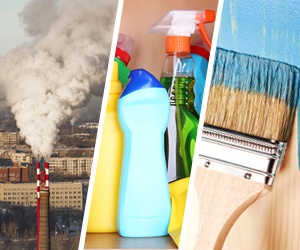
Volatile organic compounds (aka VOCs) are chemicals that evaporate into the air from household products. These household chemical pollutants and VOCs come from cleaning products, paints, aerosols, air fresheners, pesticides, and even new furniture or carpeting. Formaldehyde from pressed-wood products is also a common offender. These chemicals often irritate your eyes, nose, and throat, while long-term exposure can lead to more serious health problems. In newer, tightly built homes without proper ventilation, these pollutants can quickly build up.

Substances of Natural Origin

Substances found in nature can also affect your home’s IAQ. Radon is an odorless, colorless gas that seeps from soil into homes through cracks in the foundation. Radon gas is a significant concern in Middle Tennessee, including Nashville. Davidson County is considered a high-risk area, and local health data shows that around 40% of tested homes in that area had elevated radon levels.

Mold is another concern. Thanks to our warm climate and the high humidity in Tennessee homes, mold easily grows indoors. Warm, damp areas like basements and bathrooms are prime spots for mold and mildew problems, which can trigger asthma and allergies. Dust, pollen, and pet dander can also affect indoor air quality.

Other Indoor Toxins

If you have an older home, it may still contain lead from old paint or dust, or asbestos materials. Some air purifiers even produce ozone, an outdoor pollutant that can be generated indoors. Other outdoor pollutants, like pollen or agricultural dust, can also sneak in through drafts and open windows.

Why Indoor Air Quality Matters for Health

Breathing unhealthy air at home can cause immediate symptoms like sneezing, coughing, eye, nose, or throat irritation, and headaches. Triggers such as dust mites, mold spores, pet dander, insect or roach droppings, and tobacco smoke can easily affect those with asthma.

Handsome depressed man sitting on sofa at home.

Over time, chronic exposure to indoor pollutants can raise the risk of serious disease. Radon gas exposure can lead to lung cancer after years of elevated levels. In fact, it’s the second leading cause of lung cancer in the U.S. Also, long-term exposure to combustion materials like carbon monoxide (CO) or nitrogen dioxide can harm your respiratory system, while the fine particles from indoor smoke are linked to heart and lung disease.

Maintaining a healthy home environment in your Tennessee home is just as important as clean water or a solid roof.

Improving Your Home’s Indoor Air Quality

There are many effective steps you can take to improve your home’s indoor air quality. It’s important to focus on reducing pollution sources, keeping contaminants out, and bringing in fresh, controlled air.

Choose Low-Emitting Products and Clean Green

Take a closer look at what you bring into your home because many cleaning products, paints, and air fresheners release strong chemicals. Switch to cleaners made with natural or low-VOC ingredients. Avoid heavy fragrances. Simple solutions like soap and water or vinegar often work just as well as harsher cleaners. Always ventilate when using chemicals and never mix chlorine bleach and ammonia-based cleaners. These are smart tips to improve indoor air quality for any household.

Seal Air Leaks to Keep Pollutants Out

Air sealing plays a significant role in both your comfort and health. Gaps around your windows, doors, attic, and crawl space allow pollen, dust, humidity, and fumes to enter. Sealing these cracks and gaps helps keep these outdoor pollutants outside where they belong. It also helps prevent the entry of humid outside air, which can contribute to mold growth in hidden spaces. Reducing air infiltration helps you create a healthier indoor environment by limiting the noise, dust, pollutants, insects, and rodents that get in.

A tightly sealed home in Tennessee will feel less drafty and help bar many of the allergens residents suffer with during the spring pollen season. Standard sealing methods include caulking gaps or adding weatherstripping. Spray foam insulation is a highly effective choice because it seals and insulates in one step. This helps maintain a strong energy efficiency and IAQ balance. When spray foam is applied, it expands to fill cracks and crevices for a tighter building envelope.

It’s important to remember that a well-sealed home improves indoor air quality only if it’s also appropriately ventilated.

Ensure Proper Ventilation

Once your home is sealed, controlled ventilation becomes critical to removing indoor contaminants and moisture. You can no longer rely on random drafts for fresh air. The best strategy is to seal your home and then provide controlled ventilation as needed so your house can “breathe.”

Gloved hand replacing a heavily dust-laden air filter

Kitchen and bathroom exhaust fans work great as spot ventilation to remove moisture and fumes. Many new homes in Tennessee also use ERV and HRV ventilation systems to exchange stale indoor air with filtered outdoor air. This approach lets your home breathe without relying on random drafts.

Control Humidity and Prevent Mold

Moisture and indoor air quality are closely linked. Keeping your home’s indoor relative humidity between 30–50% helps prevent mold growth and dust mites in high humidity areas like your crawl space, bathroom, and kitchen.

Helpful strategies to control humidity and moisture include:

  • Use a dehumidifier in your damp crawl space during our muggy summer months.
  • Run your A/C as needed because it dehumidifies as it cools.
  • Repair plumbing or roof leaks promptly to prevent a small drip from becoming a big mold problem.
  • Use exhaust fans in your bathroom and kitchen to vent steam outside.
  • Ensure your home’s drainage directs rainwater away from your home’s foundation.

Following these steps will help maintain proper humidity control for the comfort and health of your home and family.

Maintain and Filter Your HVAC System

Your heating and cooling system plays a significant role in your home’s indoor air quality. A well-maintained HVAC system helps filter out dust and distribute fresh air. It’s important to replace your air filters regularly (at least every 3 months). Many homeowners choose to use high-efficiency HVAC air filters, such as MERV 11 or higher filters, to capture more airborne particles. Some families benefit from HEPA filtration for allergies or whole-house air purifier systems. Addressing leaky ducts and dirty ductwork and even investing in professional duct cleaning and sealing services can help improve your IAQ and system performance.

Test for Invisible Dangers

Some of the most harmful indoor pollutants are the ones you can’t see or smell. That’s why it’s very important to test for these invisible dangers. Radon testing is recommended for all Tennessee homeowners, and free test kits are available through the Tennessee Department of Environment & Conservation. Carbon monoxide detectors should be installed on every level of your home, especially near sleeping areas and fuel-burning appliances.

Breathe Easier at Home with Hayes Insulation Nashville

Indoor air quality often gets overlooked, but it’s one of the most important factors in your daily health. With smart product choices, building improvements such as proper ventilation and professional air sealing, and simple habits, you can create a safer, more comfortable home for you and your family. Your home should be a place full of fresh, clean air, not a source of pollutants.

Happy family, father and girl playing in a house with freedom, bonding and enjoying quality time together.

If you’re looking for trusted indoor air quality services in Nashville, TN, Hayes Insulation Nashville is here to help. Our experienced team understands local building conditions and knows how to improve air sealing and insulation using proven solutions like spray foam. We help keep outdoor pollutants out, manage moisture, and improve energy efficiency to reduce allergy and asthma symptoms so your family can truly breathe easier at home.

Contact us today for a free consultation and take the next step toward healthier indoor air in your Tennessee home.

References

Metropolitan Government of Nashville and Davidson County. (n.d.). Radon information. Metro Public Health Department. https://www.nashville.gov/departments/health/environmental-health/radon-information.

Priority Health. (n.d.). Breathe easier: Fight indoor air pollution in your home. Think Health. https://thinkhealth.priorityhealth.com/breathe-easier-fight-indoor-air-pollution-in-your-home/.

Tennessee Department of Health. (n.d.). Healthy Homes- Carbon Monoxide.https://www.tn.gov/health/cedep/environmental/healthy-homes/hh/carbon-monoxide.html.

Tennessee Department of Health. (n.d.-a). Indoor air. https://www.tn.gov/health/cedep/environmental/safe-places/safe-operation/indoor-air.html.

Tennessee Department of Health. (n.d.-b). Mold. https://www.tn.gov/health/cedep/environmental/safe-places/safe-operation/mold.html.

Trane Technologies. (Sept. 17, 2025). HVAC Air Filters: MERV 8 vs MERV 11 vs MERV 13. https://www.trane.com/residential/en/resources/blog/merv-8-vs-merv-11-vs-merv-13/.

U.S. Department of Energy. (n.d.). Air sealing: A guide for contractors to share with homeowners (Report No. 753773). UNT Digital Library. https://digital.library.unt.edu/ark:/67531/metadc708735/m2/1/high_res_d/753773.pdf.

U.S. Department of Energy. (n.d.). Types of Insulation. https://www.energy.gov/energysaver/types-insulation#:~:text=Sprayed%2DFoam%20and%20Foamed%2DIn%2DPlace%20Insulation.

U.S. Department of Energy. (n.d.). Whole-House Ventilation.https://www.energy.gov/energysaver/whole-house-ventilation#:~:text=A%20.gov%20website%20belongs%20to%20an%20official%20government%20organization%20in%20the%20United%20States.&text=There%20are%20two%20types%20of%20energy%2Drecovery%20systems:%20heat%2Drecovery

U.S. Environmental Protection Agency. (n.d.). Care for Your Air: A Guide to Indoor Air Quality. https://www.epa.gov/indoor-air-quality-iaq/care-your-air-guide-indoor-air-quality#:~:text=Adjusting%20humidity:The%20humidity%20inside,humidity%20setting%20on%20the%20humidifier.

U.S. Environmental Protection Agency. (n.d.). Health Risk of Radon. https://www.epa.gov/radon/health-risk-radon#:~:text.

U.S. Environmental Protection Agency. (n.d.). Indoor air quality. Report on the Environment. https://www.epa.gov/report-environment/indoor-air-quality.

U.S. Environmental Protection Agency. (n.d.). Indoor air quality (IAQ). https://www.epa.gov/indoor-air-quality-iaq#:~:text=We%20spend%20about%2090%%20of%20our%20time%20indoors?

U.S. Environmental Protection Agency. (n.d.). Volatile organic compounds’ impact on indoor air quality. https://www.epa.gov/indoor-air-quality-iaq/volatile-organic-compounds-impact-indoor-air-quality.